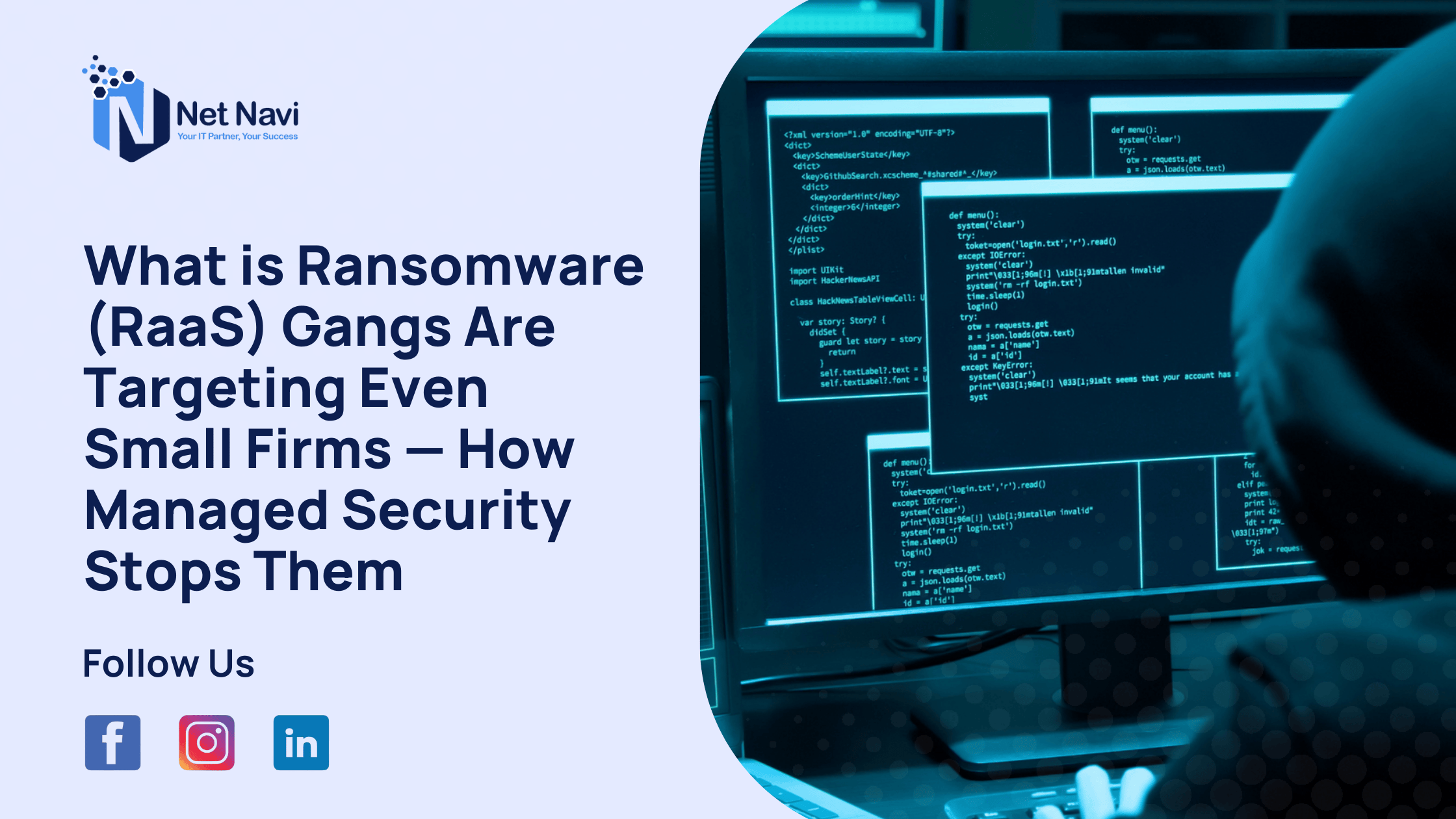
Ransomware is malware that blocks access to your files and demands payment, and attackers use it to force quick profit. It enters through phishing emails, weak passwords, or unpatched systems. Once inside, it encrypts data and stops your operations. You lose access to documents, client records, and business apps. This attack targets firms that lack monitoring or strong authentication. You reduce this risk with secure backups, endpoint protection, and continuous threat tracking. The key term What is Ransomware helps search engines understand the focus of this topic and improves content relevance for users looking for clear guidance.
Why Ransomware as a Service Hits Small Firms
Ransomware as a Service is now a ready to use product for criminals. Small firms face constant attacks because they run lean operations and lack full time security teams. Attackers treat small firms as quick wins. You want protection, stability, and confidence in your systems. NetNavi gives you that control.
Ransomware as a Service is rising each month. Small firms suffer because attackers rely on automated RaaS attacks. Criminals use malware payload kits sold on the dark web. They exploit phishing entry points and weak passwords. They buy access from initial access brokers who scan the internet for exposed systems. These brokers sell credentials from old breaches. Attackers combine this with fast encryption tools. This allows them to launch cyber extortion attempts on firms that lack defenses.

Endpoint protection plays a major role in stopping these threats. Network monitoring looks for suspicious behavior. Threat detection alerts teams when a device acts outside normal activity. Incident response teams isolate devices to prevent spread. Managed security services provide all these controls. NetNavi managed security supports small firms with systems that block ransomware before it disrupts your business.
A data backup strategy is critical. A disaster recovery plan keeps your operations running after an attack. NetNavi builds secure backup layers and recovery processes around your business. Zero trust controls prevent attackers from accessing multiple systems. MFA adds strong protection. Patch management closes unpatched vulnerabilities. Vulnerability scans reveal hidden risk points.
RaaS gangs will continue to target small firms. Attackers focus on companies that believe they are too small to matter. You stay safe when you deploy strong controls now. NetNavi gives you monitoring, detection, and rapid response that protects your operations every day.
How RaaS Attacks Work
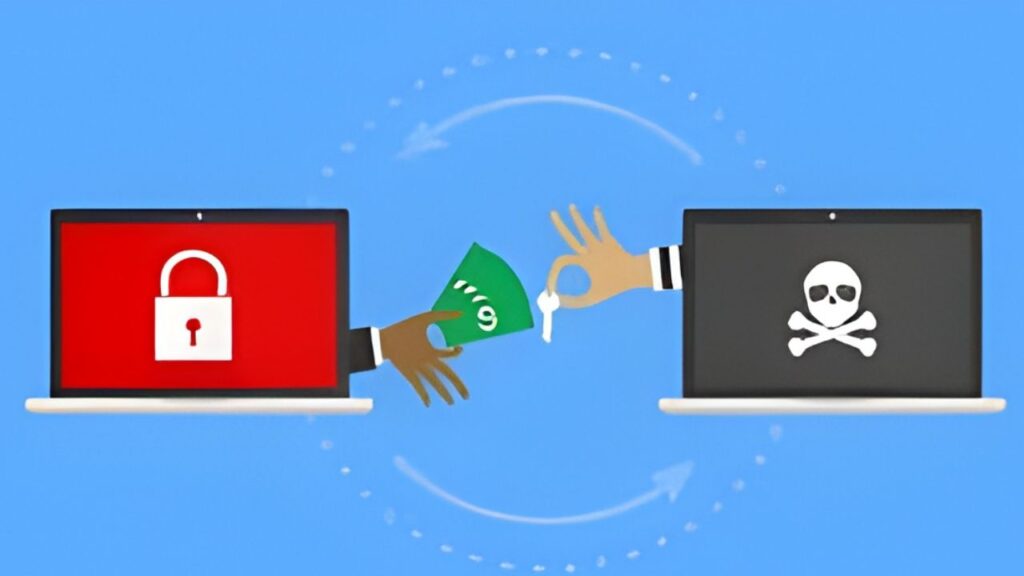
RaaS attacks follow a simple pattern. A criminal buys a malware payload. They scan for weak devices. They send phishing messages. Once inside, they encrypt your files and demand payment. They do not care about company size. They care about fast payouts. If you store customer data or rely on daily operations, you become a profitable target.
Entry Points RaaS Gangs Use
RaaS gangs use phishing entry points, stolen credentials, and exposed remote access tools. They target weak passwords. They test old breach data. They use automated scans. They buy access from brokers who sell entry into small business networks.
Why Small Businesses Face Higher Cyber Risk
Small firms run older devices. Many use unpatched software. Many rely on shared passwords. Many store data on local machines. Attackers see this as low cost opportunity. They automate thousands of attempts per day. One weak device can give them full entry.
How NetNavi Managed Security Blocks RaaS
You defend against RaaS with strong controls. You need endpoint protection, network monitoring, and real time threat detection. NetNavi managed security services deliver these protections. You get constant oversight and active blocking.
Phishing Entry Points You Must Close
Phishing remains the most common attack path. Staff open emails that look normal. Attackers use short, believable messages. They attach fake invoices. They copy vendor language. Your staff need protection before the message reaches them. NetNavi filters harmful emails and reduces your exposure.
How Initial Access Brokers Target Your Network
Initial access brokers search for weak login systems. They test stolen passwords on remote desktop services. They attack VPN portals. They try to enter any system that has not enabled strong authentication. You stop this with multi factor authentication. NetNavi deploys MFA across your accounts. A stolen password becomes useless.
Why MFA and Zero Trust Reduce Ransomware Damage
MFA blocks many breach attempts. Zero trust controls limit what each user can access. If an attacker gets into one account, they cannot move across your systems. NetNavi sets access rules based on job roles. This blocks lateral movement and exposes attackers fast.
How Patch Management Cuts RaaS Risk
Attackers monitor new vulnerability disclosures. They build exploits quickly. If your devices stay unpatched, you become an easy target. NetNavi manages patching across your network. We track versions, push updates, and remove silent weaknesses before attackers find them.
Why Backups and Recovery Plans Matter
Many believe cloud storage is enough. It is not. RaaS groups often target cloud synced folders. You need versioned backups stored off site. You need copies attackers cannot modify. You need a recovery plan that restores systems in hours. NetNavi builds a disaster recovery plan around your environment. You stay operational even after an attack.
How a 24/7 SOC Reduces Downtime
RaaS attacks move fast. You need instant response. NetNavi runs a 24,7 SOC that monitors traffic and alerts on threats. Analysts isolate infected devices. They block harmful processes. They cut suspicious connections. You avoid long downtime and protect revenue.
Why Managed Security Costs Less Than a Breach
Many firms assume managed security is expensive. A single ransomware incident often costs more. You lose time, data, and customers. You face reputational damage. You spend days recovering. Managed security gives you predictable monthly pricing. You protect your operations and avoid major disruption.
How NetNavi Strengthens Your Security Stack
NetNavi improves every layer of your stack. You get endpoint protection. You get network monitoring. You get MFA. You get zero trust controls. You get patch management. You get data backups. You get incident response. You get support that adapts as threats evolve.
What You Can Do Today to Reduce RaaS Exposure
You can start by closing weak entry points. Enable MFA across accounts. Update old devices. Train staff on phishing. Review your backup setup. Connect with a managed security partner that handles threat monitoring and response. NetNavi gives you the structure and oversight you need.
Your business needs predictable protection. You want systems that stay online. You want customer data safe. You want employees productive. NetNavi provides security that fits these demands with managed IT services and managed cyber security services.
FAQ’s
What is ransomware?
Ransomware is malware that locks your files and asks for payment to unlock them. It stops your operations and puts your data at risk.
How does ransomware enter a system?
It enters through phishing emails, weak passwords, unsafe downloads, or unpatched software.
What happens after ransomware infects a device?
It encrypts files and blocks access to your data. You see a payment message and your system becomes unusable.
Should you pay the ransom?
Paying does not guarantee recovery. You also risk another attack. Strong backups and fast response give you safer recovery.
Why are small firms targeted?
Attackers look for easy entry points. Many small firms use outdated software and lack monitoring, which increases risk.
How can you prevent ransomware?
You protect your network with strong authentication, endpoint protection, continuous monitoring, and secure backups.
Can backups stop ransomware damage?
Yes. Versioned and isolated backups allow you to restore data without paying attackers.
What is the role of employee training?
Training helps staff identify phishing attempts. This reduces the main entry point for ransomware.
Can ransomware spread across a network?
Yes. Once inside, it moves to other devices if access controls are weak.
How fast can ransomware cause damage?
It can encrypt files within minutes. Early detection and fast response reduce downtime.